The cloud changed everything about how we work. But somewhere along the way, we accepted a trade-off that never should have been necessary: giving up ownership of our own data in exchange for convenience.
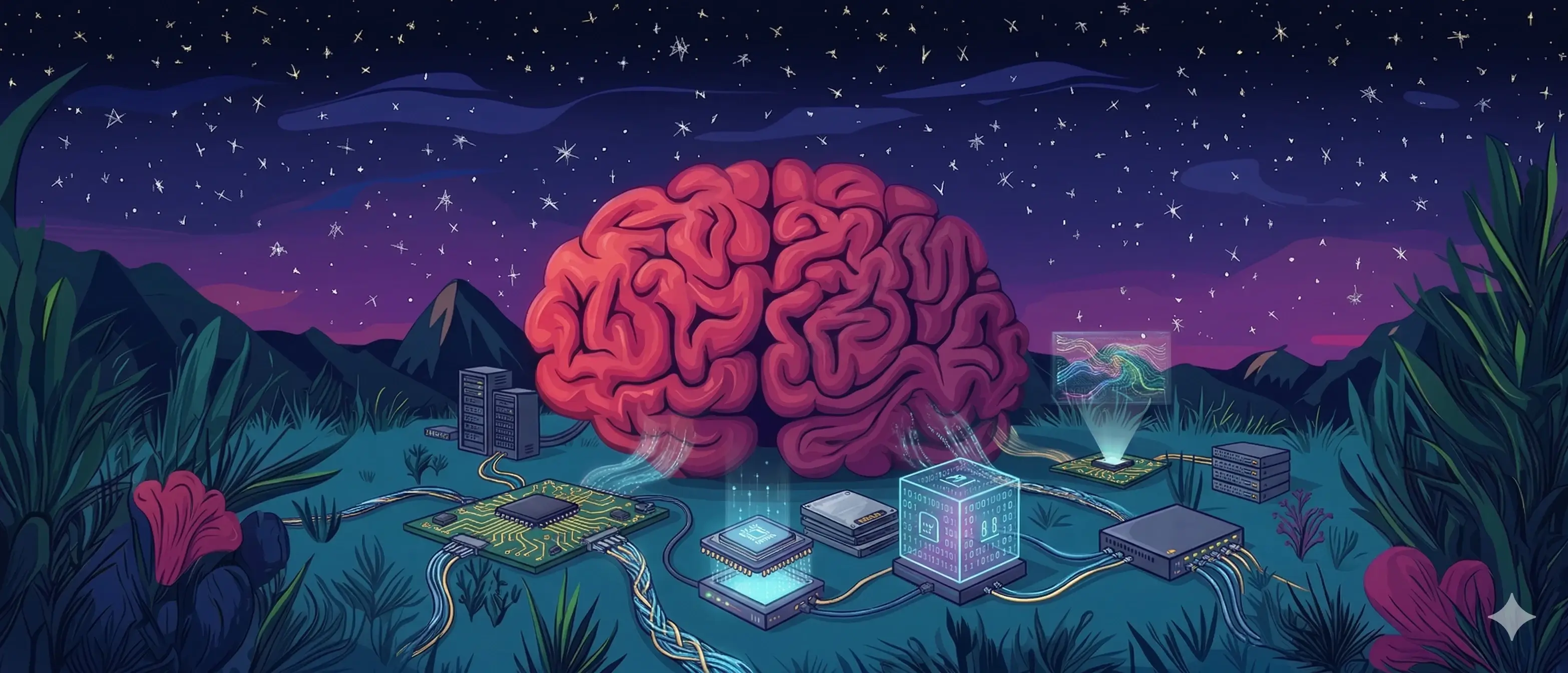
At TapoWise, we rejected that trade-off. Our architecture is local-first — your notes, your graphs, your entire knowledge base lives on your device. The cloud is optional, never required.
What "Local-First" Actually Means
Local-first isn't just "offline support." It's a fundamentally different philosophy:
- Your device is the source of truth — not a cache of some server's data. Your files exist as real files on your disk, readable by any tool.
- The app works without internet — always. Not in a degraded mode, not with a spinner, but fully. Because there's nothing to wait for.
- Sync is additive, not essential — when you choose to sync (via TwiceSync), it replicates your data across devices. But it never becomes a dependency.
The Technical Stack
Under the hood, TapoWise stores everything as plain Markdown files in a directory you control. There's no SQLite database, no proprietary binary format, no hidden .dat files.
~/TapoWise/
  notes/
    daily/
      2026-03-18.md
    projects/
      tapowise-launch.md
    ideas/
      knowledge-graph-ux.md
  .tapowise/
    snapshots/
    graph.json
The .tapowise directory contains metadata — snapshots for version history and a computed graph index. But even this is derived data. Delete it, and TapoWise rebuilds it from your Markdown files.
Why This Matters for Privacy
Most note-taking apps send your data to servers you don't control. Even "encrypted" solutions often hold the keys. With TapoWise:
- Zero telemetry — We don't know what you write, how often you write, or even that you exist.
- No account required — Download, open, start writing. That's it.
- Full portability — Your notes are Markdown. Move them anywhere, anytime.
The Sync Question
"But what about multiple devices?" — this is the question every local-first tool has to answer.
Our answer is TwiceSync: an optional, end-to-end encrypted sync layer that replicates your vault across devices. The encryption keys never leave your devices. We cannot read your data even if we wanted to.
TwiceSync is a convenience layer, not an architecture dependency. If our servers go down tomorrow, your notes are exactly where you left them — on your disk.
Trade-Offs We Accept
Being honest about local-first means being honest about its limitations:
- Real-time collaboration is harder. We're exploring CRDTs for future collaborative features, but today TapoWise is a personal tool.
- Search across devices requires sync. If you don't sync, each device's search is limited to its own vault.
- Mobile is challenging. File system access on iOS/Android is more restricted. We're working on native solutions that preserve the local-first guarantee.
We believe these trade-offs are worth it. Your knowledge is too important to hand over to someone else's server.
Curious about the technical details? Follow our engineering blog for deep dives into CRDTs, conflict resolution, and building performant local-first apps.